
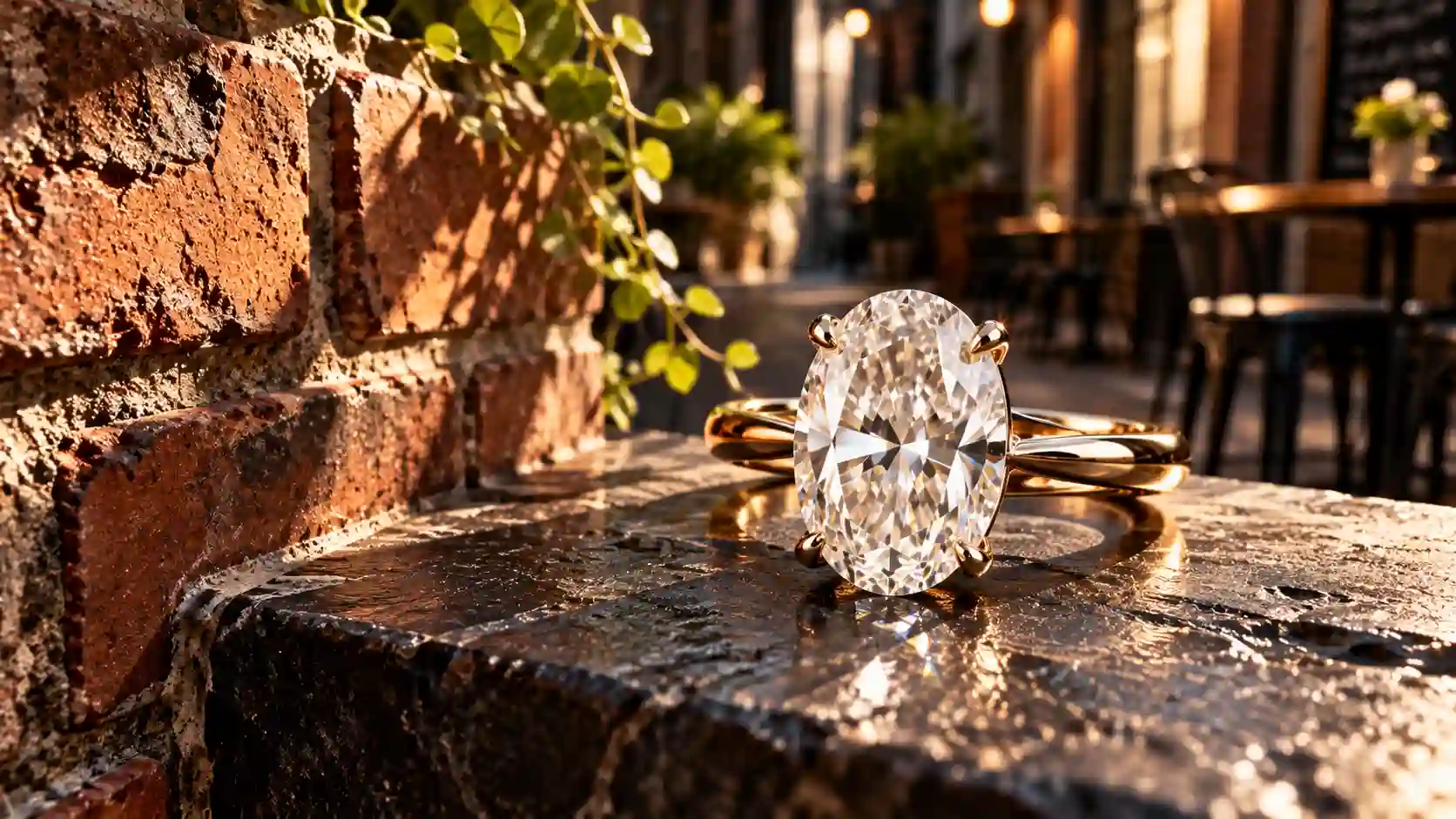
Nowhere is this cultural evolution more pronounced than in the fine jewellery world. For decades, engagement rings and milestone heirlooms were governed by rigid corporate marketing and subterranean diamond cartels, despite significant ecological disruption and fragmented supply networks. Today, Melbourne’s creative community is redefining the bridal landscape. Forward-thinking couples and discerning design enthusiasts are seeking out dedicated ateliers for lab grown diamonds Melbourne artisans champion, creating bespoke jewellery pieces that unite uncompromising aesthetic fire with verifiable environmental responsibility.
This cultural migration extends far beyond Australia’s borders. International market assessments exploring regional retail dynamics show how the rapid global adoption of lab grown diamonds represents an enduring transformation in consumer values. Below, we examine the gemological physics of diamond synthesis, Melbourne’s distinctive design language, and an expert roadmap for curating your dream heirloom.
The Gemological Reality: Identical Crystallization and Optical Brilliance
A central question among first-time jewellery buyers is whether cultivated stones can be classified as real diamonds. In gemology and mineral physics, the answer is unequivocal: chemically, physically, and optically, laboratory-grown diamonds are authentic diamonds. They share zero common ground with cheap imitations such as glass paste, cubic zirconia, or synthetic moissanite.
Every natural diamond is formed of pure carbon (C) organized in an isometric-hexoctahedral cubic lattice. In this dense atomic arrangement, each carbon atom forms covalent bonds with four surrounding atoms in a rigid tetrahedral geometry. This structure yields diamond’s unique characteristics:
- Unsurpassed Mohs Hardness: Rated a solid 10 on the Mohs mineral scale, offering total resistance against scratching, clouding, or surface abrasion over generations of daily wear.
- High Refractive Index: A refractive index of 2.417 ensures sharp interior light bending, creating unmatched brilliance.
- Optical Dispersion: A dispersion rating of 0.044 splits incoming white light into a vibrant spectrum of prismatic colours, often called diamond fire.
- Superior Thermal Conductivity: Surpassing 2,200 W/(m·K), crystalline diamond conducts heat over five times more efficiently than silver or copper.
Cultivation facilities recreate subterranean mantle dynamics through two advanced engineering processes: Chemical Vapor Deposition (CVD) and High Pressure High Temperature (HPHT). The resulting rough crystals are cut, polished, and independently certified by leading gemological authorities, such as the International Gemological Institute (IGI) and the Gemological Institute of America (GIA), utilizing the universal 4Cs framework: Cut, Clarity, Color, and Carat weight.


Comparative Analysis: Cultivated Stones vs. Extracted Diamonds
To help modern buyers evaluate their options objectively, the following comparison highlights key material, ecological, and practical differences:
| Evaluation Benchmark | Laboratory Cultivated Diamond | Geologically Mined Diamond | Cubic Zirconia (CZ Simulant) |
|---|---|---|---|
| Chemical Structure | 100% Pure Carbon (C) | 100% Pure Carbon (C) | Zirconium Dioxide (ZrO2) |
| Hardness (Mohs Scale) | 10.0 (Lifetime Heirloom) | 10.0 (Lifetime Heirloom) | 8.0 – 8.5 (Prone to Scratches) |
| Refractive Index | 2.417 | 2.417 | 2.15 – 2.18 |
| Optical Fire (Dispersion) | 0.044 (Crisp Fire) | 0.044 (Crisp Fire) | 0.060 (Glassy Artificial Glare) |
| Land & Water Disruption | Zero Earth Excavation | Extensive Open-Pit Earth Moving | Low Industrial Footprint |
| Supply Chain Lineage | Direct Provenance Traceability | Often Fragmented Across Global Borders | Industrial Synthetic Production |
| Value Efficiency | High Carat-for-Budget Ratio | Significant Legacy Extraction Markup | Zero Long-Term Value |
Melbourne’s Bespoke Aesthetics: Character, Texture, and Modern Heritage
Fine jewellery styling in Melbourne mirrors the city’s celebrated architectural fabric, where 19th-century Victorian brickwork sits comfortably alongside sharp, contemporary glass structures. Local jewellery lovers prioritize intentional, bespoke craft over cookie-cutter mass production:
1. Organic Textures and Matte Metal Finishes
Rather than defaulting to mirror-polished commercial bands, Melbourne commissions frequently incorporate subtle surface textures. Brushed satin bands, hand-hammered rims, and organic sand-cast textures lend custom rings a distinctive, collected-over-time character that complements curated wardrobes.
2. Architectural Geometries and Low-Profile Bezel Mounts
Active urban lifestyles require jewellery that balances visual impact with everyday utility. Contemporary couples in Melbourne are gravitating toward low-profile bezel and semi-bezel mounts. Enclosing a diamond’s girdle in a fine collar of platinum or warm gold protects the stone during commutes and active weekends while presenting clean, modern lines.
3. The Rise of Fancy Elongated Shapes
While the round brilliant remains an enduring choice, fancy elongated shapes—such as emerald, radiant, and oval cuts—are leading bespoke requests. These silhouettes flatter the natural line of the hand while offering a generous surface footprint relative to their carat weight.
The Environmental Imperative: Transparent Origins for Conscious Living
A primary catalyst driving the adoption of lab grown diamonds Melbourne consumers champion is genuine ethical accountability. Traditional subterranean open-pit mining requires removing hundreds of metric tonnes of topsoil and rock for every polished carat retrieved. This industrial excavation often results in regional soil erosion, groundwater depletion, and delicate ecosystem fragmentation.
Conversely, cultivated gemstones are grown in modern, contained technological facilities. As global renewable energy infrastructure expands, leading synthesis foundries operate on clean solar, wind, and regional hydroelectric power grids. By choosing cultivated stones, modern couples can be confident their heirloom caused zero landscape devastation or community dislocation.
Furthermore, laboratory diamonds resolve supply chain opacity. While international initiatives like the Kimberley Process have reduced conflict stones, tracing a mined diamond back to its exact point of extraction remains challenging. With laboratory cultivation, the entire journey—from single crystal seed to master lapidary bench—is completely traceable.
Buyer’s Blueprint: How to Choose Your Ideal Stone
When selecting your custom lab-grown diamond, using a structured gemological framework ensures you achieve the best harmony of fire, structural durability, and value:
- Prioritize Cut Proportions First: Cut is the primary variable controlling light return and visual life. Always select an “Ideal” or “Excellent” cut grade before adjusting carat or clarity. An expertly cut diamond maximizes internal reflection, appearing brighter, whiter, and visually larger than a poorly proportioned stone of higher clarity.
- Target the Eye-Clean Clarity Sweet Spot: Avoid paying heavy markups for flawless classifications when minor inclusions in VS1 or VS2 stones are invisible to the unaided eye. This approach frees up budget for higher cut precision or a bespoke metal setting.
- Harmonize Color with Precious Metal Choice: If selecting a platinum or white gold setting, stay within the D, E, or F colorless bracket to keep an icy, crisp aesthetic. For rich yellow gold or warm rose gold mountings, near-colorless stones (G, H, or I) appear bright and white while offering superior value.
- Demand Independent Certification: Ensure the gemstone is accompanied by an independent grading report from recognized laboratories like IGI or GIA. Always verify that the report number matches the microscopic laser inscription etched directly on the diamond’s girdle.
Conclusion: The New Era of Fine Luxury
True luxury today is defined by mindfulness, craftsmanship, and personal resonance. An heirloom should celebrate human milestones without compromising the natural world.
By uniting advanced materials engineering with bespoke handcrafting, lab-grown diamonds provide a brilliant, responsible, and permanent path forward. Selecting an ethical diamond ensures your personal milestone shines with beauty, character, and enduring pride for generations to come.
