Introduction
Buying a car is a major financial decision. Whether you are purchasing your first vehicle or replacing an older model, small mistakes can become expensive problems. Understanding the Top Automobile Buying Mistakes to Avoid can help you make a smarter decision and enjoy your vehicle with greater confidence.
Many buyers focus only on the purchase price. However, a car also involves insurance, fuel, maintenance, registration, repairs, depreciation, and financing costs. Therefore, looking beyond the showroom price is essential.
A successful automobile purchase starts with preparation. You need to understand your budget, compare suitable vehicles, inspect the car carefully, and review all paperwork before signing. With the right approach, you can avoid unnecessary expenses and choose a vehicle that matches your actual needs.
Why Avoiding Automobile Buying Mistakes Matters
A vehicle can remain with you for several years. Consequently, a poor buying decision can affect your finances long after the purchase.
One common mistake is choosing a car based on appearance alone. A vehicle may look impressive while offering poor fuel economy or expensive maintenance. Similarly, a low purchase price does not always mean lower ownership costs.
Another problem occurs when buyers rush through negotiations. Dealers may present attractive monthly payments while hiding the total financial commitment. Therefore, always consider the complete purchase cost.


Learning the Top Automobile Buying Mistakes to Avoid gives you a practical advantage. It helps you compare vehicles objectively rather than making an emotional decision.
Failing to Set a Realistic Budget
One of the biggest automobile buying mistakes is shopping without a clear budget. Buyers often decide how much they can pay for the vehicle but forget about other ownership expenses.
Your budget should include the down payment, monthly payment, insurance, fuel, servicing, taxes, registration, and unexpected repairs. These costs can significantly change the true price of a vehicle.
It is also important to maintain an emergency fund after purchasing the car. Spending your entire savings on the vehicle can leave you financially vulnerable.
A practical budget should comfortably accommodate your regular expenses. Avoid choosing a vehicle simply because a lender approves the required amount.
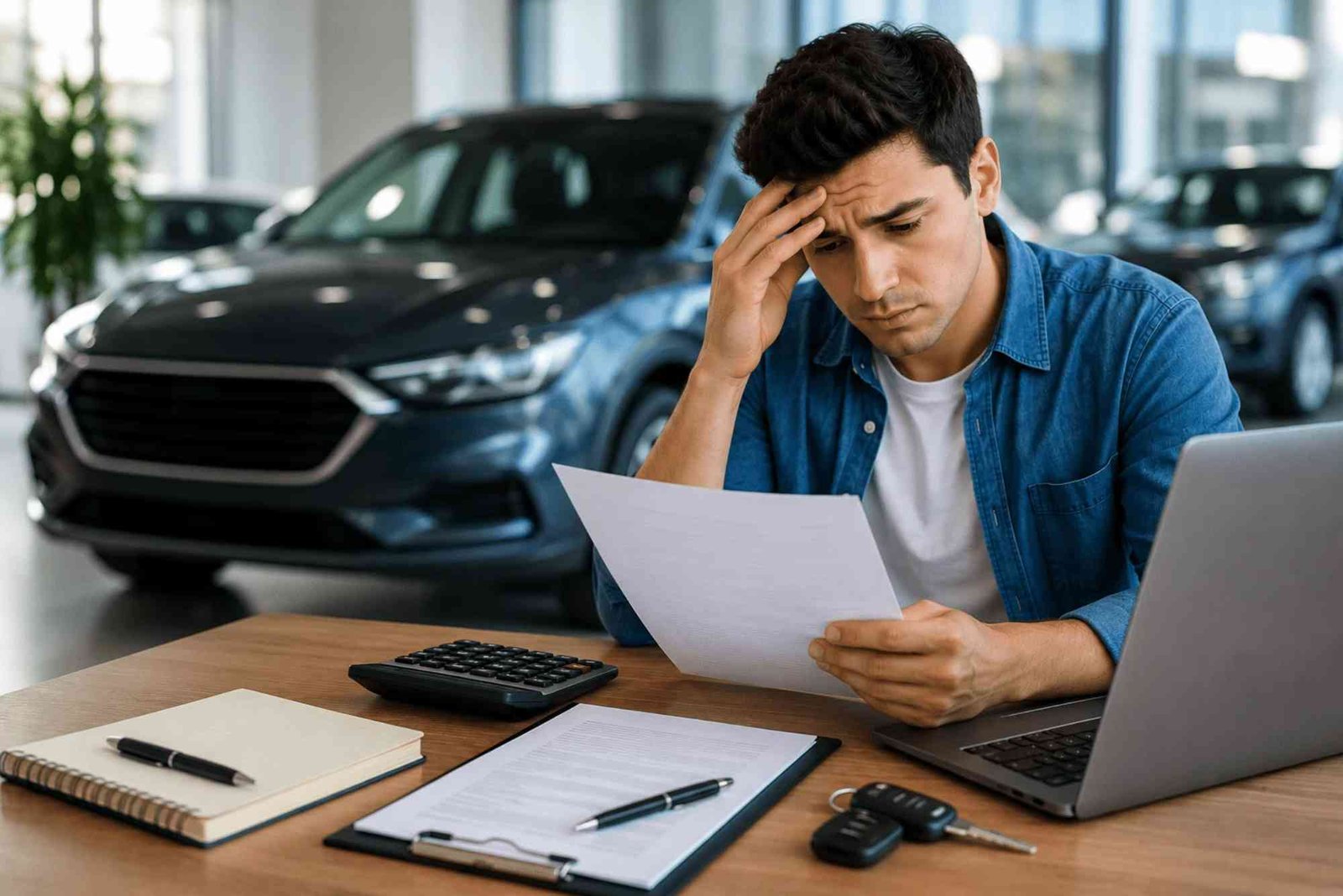
Focusing Only on the Monthly Payment
Monthly payments can make an expensive vehicle appear affordable. This is one reason buyers should examine the entire financing agreement.
A lower monthly payment may result from a longer loan term. Although the payment becomes smaller, you could pay substantially more interest over time.
Instead, compare the total amount payable, interest rate, loan duration, and additional fees. This approach gives you a much clearer picture of the financial commitment.
The same principle applies to dealer financing. Compare available financing options before accepting the first offer.
Skipping Vehicle Research
Another important mistake is failing to research the vehicle before visiting a dealership. Without research, it becomes easier to accept unsuitable features or an inflated price.
Compare different trims, engine options, safety features, fuel economy, reliability information, and ownership costs. Also, research the typical market price for the exact model.
Research should continue even after selecting a vehicle. Look into common problems reported by owners and the expected maintenance schedule.
This information can help you identify whether the vehicle is genuinely suitable for your lifestyle.
Buying Based on Emotions
A shiny new car can create excitement. However, emotional decisions can lead to expensive mistakes.
A salesperson may encourage you to act quickly because of a supposed limited-time offer. Instead of rushing, take time to evaluate the deal.
Ask yourself whether the vehicle meets your practical requirements. Consider passenger space, cargo capacity, driving conditions, fuel consumption, and expected usage.
A vehicle should fit your life rather than simply impress you during a short showroom visit.
Not Taking a Proper Test Drive
A test drive should involve more than driving around a dealership for five minutes. Buyers need enough time to understand how the vehicle feels on different roads.
Pay attention to steering, braking, acceleration, visibility, suspension, seat comfort, and cabin noise. Test the vehicle in situations similar to your normal driving.
Try adjusting the driver’s seat and mirrors. Check whether controls are easy to reach and understand.
If possible, drive both city streets and faster roads. This can reveal characteristics that are difficult to notice during a very short drive.
Ignoring the Vehicle’s Total Ownership Cost
The purchase price represents only one part of automobile ownership. Fuel, insurance, servicing, tires, repairs, and depreciation can make a significant difference.
Two vehicles with similar prices may have very different long-term costs. For example, one may require premium fuel or expensive replacement parts.
Therefore, compare expected ownership expenses before making your final decision. This is particularly important when choosing between different engine sizes or vehicle categories.
Understanding total ownership cost can prevent you from selecting a vehicle that stretches your finances.
Forgetting to Compare Insurance Costs
Insurance costs can vary considerably between vehicles. Factors such as model, engine size, age, location, safety features, and driver history can influence premiums.
Before purchasing a vehicle, obtain an insurance estimate. This simple step can prevent unpleasant financial surprises.
A car that looks affordable may become significantly more expensive once insurance is included. Comparing insurance costs can also help you decide between similar models.
Failing to Inspect a Used Car
Used vehicles require additional attention. A car can look excellent externally while having mechanical or structural problems.
Check the vehicle’s service records, ownership history, mileage, tires, brakes, suspension, fluids, lights, and interior condition.
A professional inspection is particularly valuable. An independent mechanic may identify problems that an inexperienced buyer cannot recognize.
Do not rely exclusively on the seller’s description. Independent verification provides greater confidence before committing your money.
Not Checking the Vehicle History
Vehicle history can reveal important information about a used car. Depending on the available records, you may discover previous accidents, ownership changes, mileage concerns, or major repairs.
Always verify the vehicle identification number and compare available documentation. Make sure the information matches the vehicle you are inspecting.
If important records are missing, consider why they are unavailable. A lack of documentation does not automatically mean the vehicle is problematic, but it should encourage additional caution.
Ignoring Maintenance Records
Maintenance records provide useful evidence about how a vehicle was treated. Regular servicing generally indicates that the previous owner paid attention to the vehicle’s condition.
Look for records covering oil changes, brake work, tire replacement, scheduled servicing, and major repairs.
If the vehicle requires an expensive scheduled service soon after purchase, include that expense in your negotiation and budget.
A car with a higher purchase price can sometimes be a better deal when its maintenance history is strong.
Accepting the First Price
Another common automobile buying mistake is accepting the first price without comparison.
Before negotiating, research the market value of the exact vehicle. Consider its model year, trim, mileage, condition, features, and local demand.
Use this information to establish a reasonable target price. Remain polite but confident during negotiations.
Also, separate the vehicle price from optional products and financing. This makes it easier to understand what you are actually paying for.
Overlooking Additional Fees
The advertised vehicle price may not represent the final amount you pay. Documentation charges, registration costs, taxes, financing fees, and optional products can increase the total.
Ask for a complete breakdown of the final price before signing anything.
Review every charge carefully. If you do not understand a fee, ask for an explanation.
This simple habit can protect you from paying for unnecessary services or products.
Buying Unnecessary Features
Modern cars can include numerous technology and comfort features. However, paying for features you rarely use may not be financially sensible.
Consider which features genuinely improve your driving experience. Safety systems, practical technology, and comfort features can be valuable, but expensive upgrades may not provide enough benefit.
Choose equipment according to your needs rather than the salesperson’s recommendations.
This approach can keep the purchase price under control without sacrificing important functionality.
Neglecting Safety Features
Price should never be the only consideration when buying an automobile. Safety should remain a major priority.
Research available safety equipment and compare crash-test information where reliable data is available.
Features such as modern braking assistance, stability control, airbags, and driver-assistance technologies can provide valuable protection.
However, remember that technology cannot replace responsible driving. Safe habits remain essential regardless of the vehicle you choose.
Rushing the Paperwork
Paperwork deserves careful attention. Buyers sometimes become excited and sign documents without reviewing every term.
Read the purchase agreement, financing contract, warranty information, and other documents carefully.
Check the vehicle price, interest rate, loan term, fees, warranty terms, and cancellation conditions where applicable.
Never assume that verbal promises will automatically appear in the contract. If an important agreement is missing, request clarification before signing.
Not Considering Resale Value
Resale value can influence the overall cost of owning a vehicle. Some models retain their value better than others.
Factors such as reliability, demand, condition, mileage, maintenance history, and brand reputation can affect future resale value.
If you expect to sell or trade the car within a few years, research depreciation before buying.
A slightly more expensive vehicle may sometimes provide better long-term value if it depreciates more slowly.
Choosing the Wrong Vehicle for Your Lifestyle
The best vehicle is not necessarily the most expensive or powerful option. It is the one that suits your everyday requirements.
A compact car may work well for frequent city driving. A larger vehicle may be more suitable for families or regular cargo needs.
Think about where you drive, how many passengers you carry, parking availability, fuel costs, and your typical journey length.
Making this assessment before shopping can significantly reduce the chance of buyer’s remorse.
How to Make a Smarter Automobile Purchase
Avoiding the Top Automobile Buying Mistakes to Avoid requires patience and preparation. Start by establishing a realistic total budget.
Next, research several suitable vehicles instead of focusing on one model. Compare prices, specifications, ownership costs, reliability, safety, and resale potential.
When inspecting a vehicle, take a thorough test drive and review its documentation. For used cars, consider an independent mechanical inspection.
Finally, compare financing offers and negotiate based on the complete purchase price. Do not allow monthly payments to distract you from the total cost.
Taking these steps creates a more objective buying process. More importantly, it helps you remain in control of your decision.
Frequently Asked Questions
What is the biggest mistake when buying a car?
One of the biggest mistakes is failing to calculate the total cost of ownership. Buyers should consider financing, fuel, insurance, maintenance, repairs, taxes, and depreciation.
What should I avoid when buying a used car?
Avoid buying a used car without checking its history, maintenance records, condition, and mechanical performance. An independent inspection can also reveal hidden problems.
How do I know if I am getting a good deal on a car?
Research comparable vehicles and current market prices before negotiating. Compare the exact model, trim, mileage, condition, and included features.
Should I negotiate the price of a car?
Negotiation can be worthwhile when buying a vehicle. Research the market first and focus on the total purchase price rather than only the monthly payment.
What should I check before buying a car?
Check the vehicle’s condition, history, service records, safety features, ownership costs, insurance, financing terms, and final purchase price.
Conclusion
Understanding the Top Automobile Buying Mistakes to Avoid can make the car-buying process significantly easier. The most costly mistakes usually happen when buyers rush, skip research, overlook ownership costs, or focus only on monthly payments.
Staying informed is easier when you have access to useful and engaging online content. From the latest trends and practical tips to interesting stories and everyday updates, reliable websites can help readers discover valuable information quickly. For fresh articles, helpful insights, and regularly updated content, visit Duckyupdate.com and explore topics designed to keep you informed and connected.
Related Reading: How to Extend the Life of Your Automobile Engine